
MSc Thesis Internship: Robot Learning with Human Neural Supervision
- On-site
- Berlin, Berlin, Germany
- R&D
Job description
We are looking for a Master’s student to conduct their thesis within our prototyping and applied systems team, contributing to research at the intersection of robot learning, multimodal data, and brain–computer interfaces.
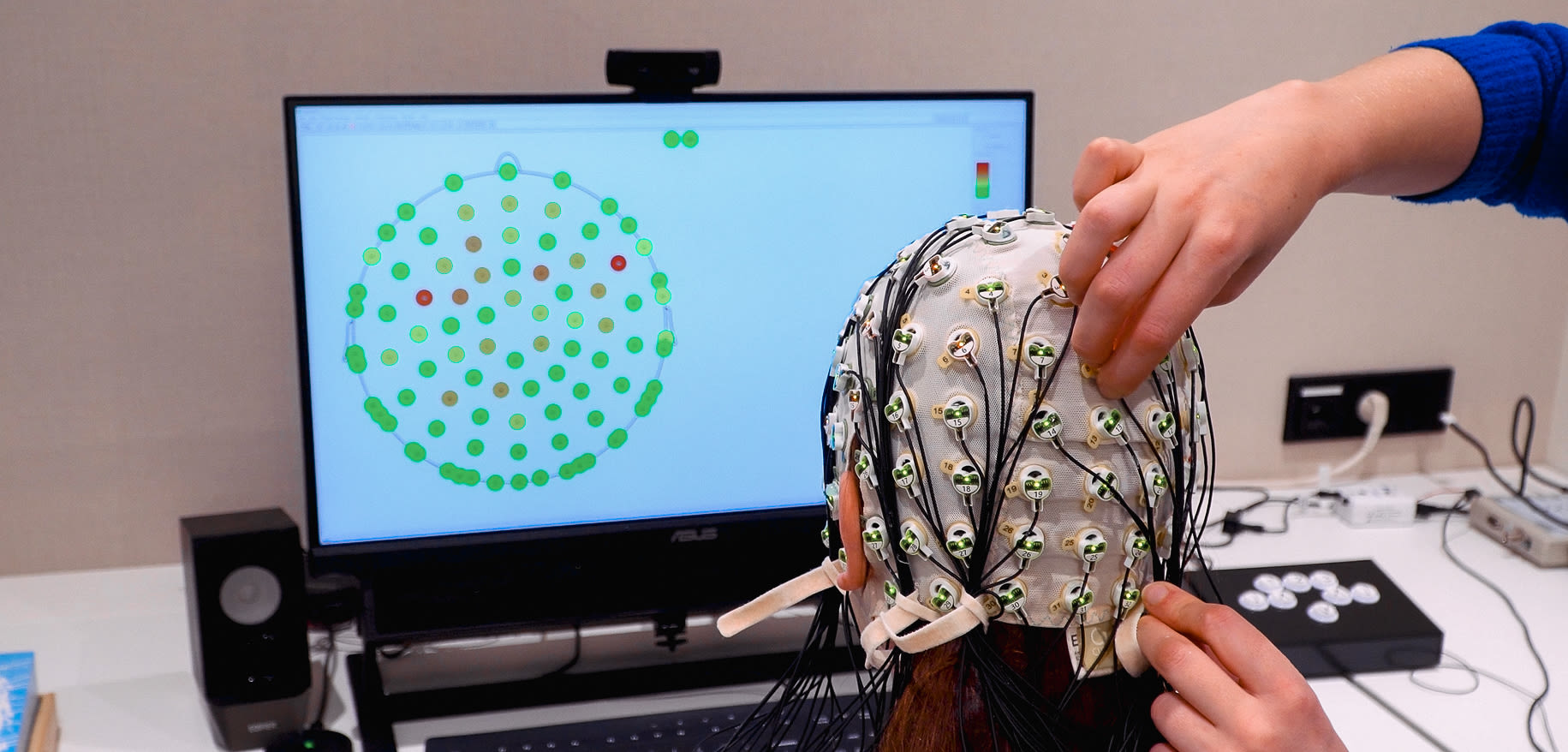
Robot demonstrations capture what a person does, but not necessarily when they recognize an error, reconsider an action, or initiate a correction. We investigate whether EEG-derived annotations can identify demonstration segments that are particularly useful for training autonomous robots.
Working closely with researchers and engineers, you will tackle a focused validation question:
can neural-informed selection or weighting of demonstration data improve robot policy performance or reduce the amount of training data required?
The project combines egocentric or teleoperation recordings, framewise behavioral annotations, and densely sampled mental-state classifier outputs. Your work will focus on downstream robot-learning experiments, with support from our neuroengineering team for interpreting the neural signals.
The role is intended to align with a Master’s thesis, subject to topic fit and university supervision.
Start: By agreement, as soon as possible
Duration: 4–6 months
Availability: 10-20 hours per week
What you will do
Define a tractable research question and evaluation protocol with the team
Prepare aligned demonstration data and annotations for robot-policy training
Implement methods for selecting or weighting demonstrations using neural and behavioral information
Compare against random selection and non-neural baselines, potentially including policy-influence methods
Train and evaluate robot policies in simulation and/or on available hardware
Assess task success, generalization, and data efficiency using controlled experiments and statistical analysis
Document reproducible experiments and contribute to your thesis and potential research publications
The thesis will address one well-defined validation step rather than require building the complete recording, neural-analysis, and robot-learning pipeline.
What we offer
Hands-on research connecting human neural signals with robot learning
Close collaboration with BCI researchers and applied-systems engineers
The opportunity to develop a rigorous thesis with practical relevance
A pragmatic, low-hierarchy environment with room to take ownership
Flexible scheduling around exams and coursework
Support for scientific writing and potential dissemination of the results
Job requirements
What you bring:
Current enrollment in a Master’s program in Robotics, Computer Science, Machine Learning, AI, or a related field
Strong interest in robot learning, imitation learning, or learning from demonstrations
Solid Python programming skills and experience with a machine-learning framework such as PyTorch
Familiarity with training and evaluating machine-learning models
An understanding of experimental design, data leakage, and meaningful baseline comparisons
Ability to translate an open research question into a manageable implementation and evaluation plan
Comfortable working independently while collaborating across disciplines
Nice to have:
Experience with imitation learning, reinforcement learning, or vision-language-action models
Familiarity with robot-learning tools such as LeRobot, RoboMimic, or simulation environments
Experience with multimodal time-series data, dataset curation, or data valuation
Experience running reproducible experiments across multiple training seeds
Exposure to EEG or brain–computer interfaces; prior neuroscience experience is not required
Prior involvement in research projects, open-source contributions, or scientific writing
or
All done!
Your application has been successfully submitted!
You've already applied for this job
We appreciate your interest in this position. Unfortunately, you have already applied for this job.